Size & framing guide
 Choose a size that suits your space.
All Archive 78 prints are supplied unframed.
Print sizes
| Size | Dimensions in centimetres | Approximate dimensions in inches |
|---|---|---|
| A2 | 42 × 59.4 cm | 16.5 × 23.4 in |
| A1 | 59.4 × 84.1 cm | 23.4 × 33.1 in |
| A0 | 84.1 × 118.9 cm | 33.1 × 46.8 in |
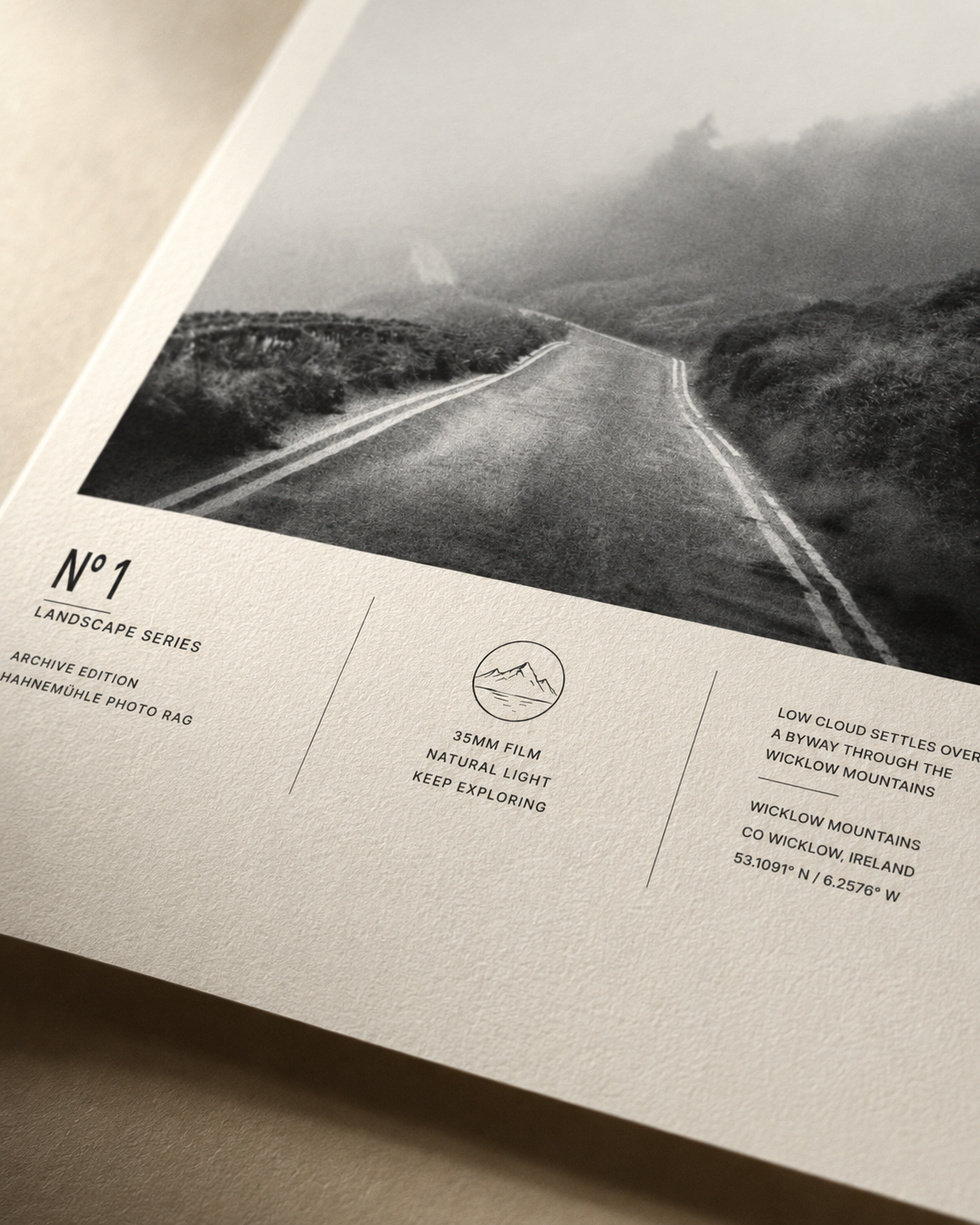
These measurements cover the whole sheet, including the photograph, typography and cream-coloured border. The border is part of the printed artwork.
Dimensions are shown as width × height for portrait prints.
Choosing a size
A2
The smallest size in the collection. A good starting point for a smaller wall, a reading corner or a grouping of prints.
A1
A larger piece with more presence. Consider it above a console, desk or sideboard, or as the focus of a smaller room.
A0
The largest format, giving the photograph and its details room to be seen. Best considered where there is enough clear wall space to accommodate both the print and its frame.
To compare sizes, mark out the dimensions on your wall using paper or a suitable removable tape. Step back and look from where you normally sit or enter the room. Allow extra space for the frame, which adds to the overall dimensions.
Room images show possible settings. Use the measurements above to judge the size for your own space.
Choosing a frame
Archive 78 prints are designed to sit in a frame without an additional mount or mat. The printed border provides space around the photograph, and the typography and field notes form part of the complete artwork.
Choose a frame made to hold the exact print size. Check the dimensions the frame accepts rather than its outside measurements, particularly when shopping in inches. A similarly sized frame may not be an exact fit.
A slim black frame complements the dark typography. Natural wood offers a softer contrast with the cream-coloured layout. Either can work well; choose the finish that suits the room.
Check how much of the paper edge the frame’s inner lip will cover, so the printed details remain visible.
Professional framing
A professional framer can help with an exact fit, suitable glazing and archival mounting materials, particularly for larger prints.
Ask about keeping the paper clear of the glazing using an appropriate spacer. This allows the work to retain its intended appearance without adding a visible mount.
Anti-reflective glazing can reduce distracting reflections. If the print will hang in a bright room, ask separately about UV protection; anti-reflective and UV-protective glazing serve different purposes.
Handling your print
Handle the print with clean, dry hands and hold it by the edges. Avoid touching or rubbing the printed surface.
If it arrives rolled, do not force it flat or roll it tightly in the opposite direction. A framer can help it relax and prepare it for framing.
Display your print away from direct sunlight, damp conditions and sources of heat.
Need a hand?
If you’re unsure about a size or frame, get in touch with the print name and the dimensions of the space you have in mind.